Launch offer — valid today only

📄 Digital book in PDF · read it on your phone or print it

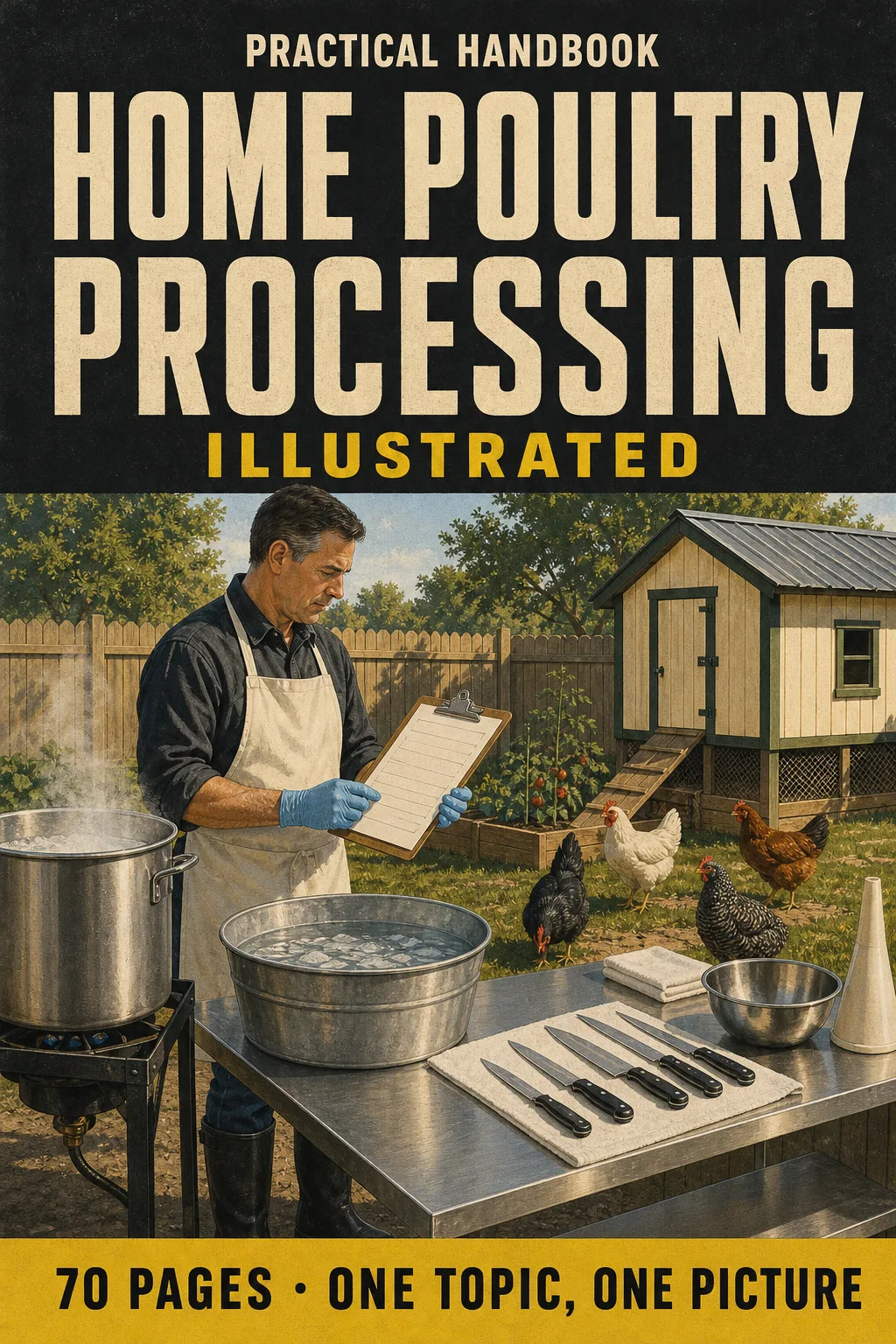
Home Poultry Processing, Scald to Freezer, in Drawings Seven Steps, Same Order Every Time

The station map, scald temperatures, the feather test, the inside of the bird, the ice-water chill, the cut-up, shrink bags and the turkey scald. Each topic has its own page: a clean line drawing first, then what you need to remember. No slaughter, no gore: the book starts with the bird ready to work on. 70 illustrated pages.

I WANT THE BOOK + 2 BONUS BOOKS

🔒 Secure checkout · PDF by email · 30-day guarantee

Every topic, its own pageEvery step drawn as a clean diagram, with the explanation right beside it
70 illustrated pages9 parts, from the seven-step route to all the numbers on one page
Up-to-date sourcesUSDA FSIS food safety guidance and Cooperative Extension guides
PDF by emailFormat

Look Inside the Book

Each page has one large drawing and a box with the temperatures, times and steps you need to know:

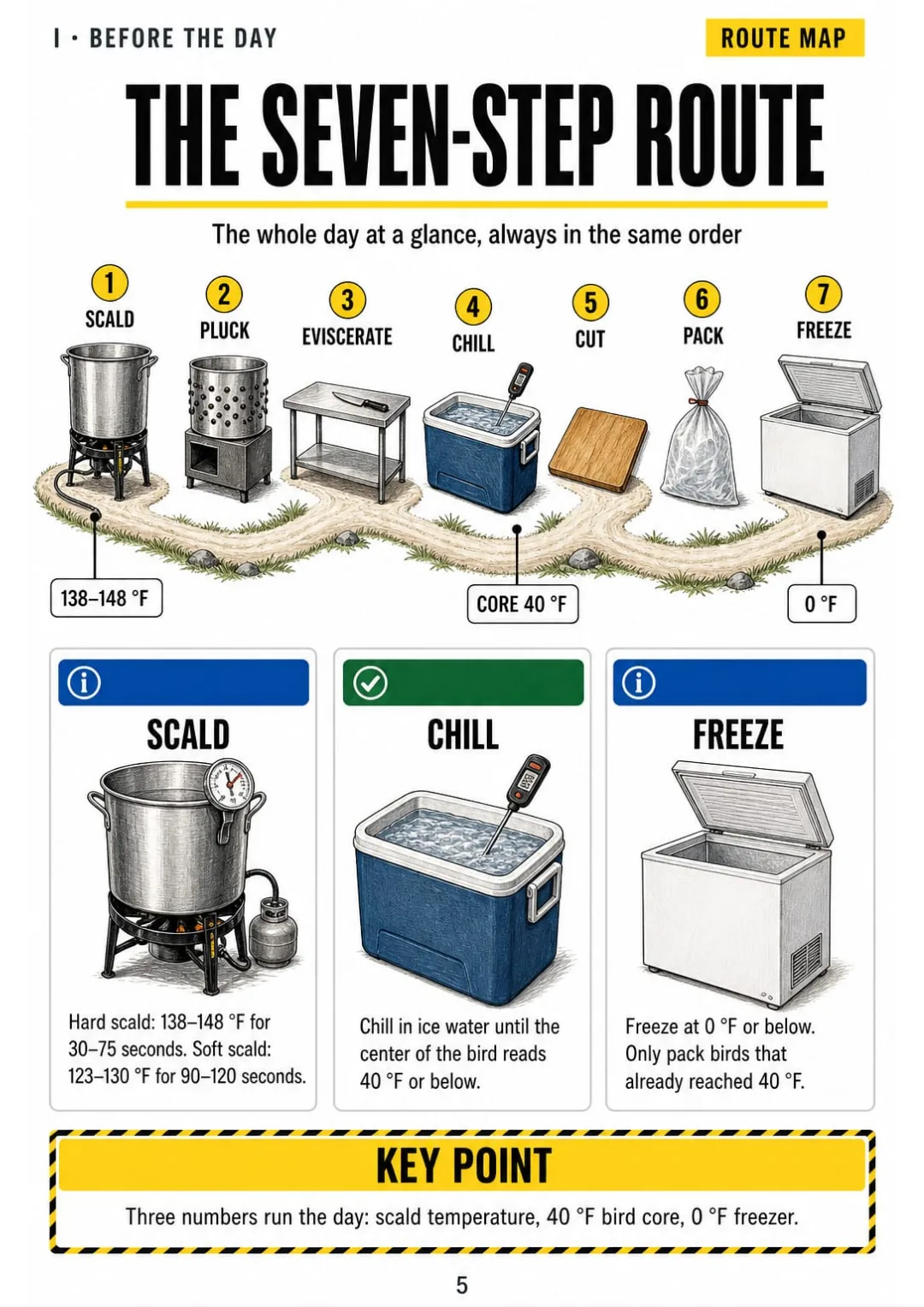
Scald, pluck, eviscerate, chill, cut, pack, freeze: the full route with its three key temperatures.
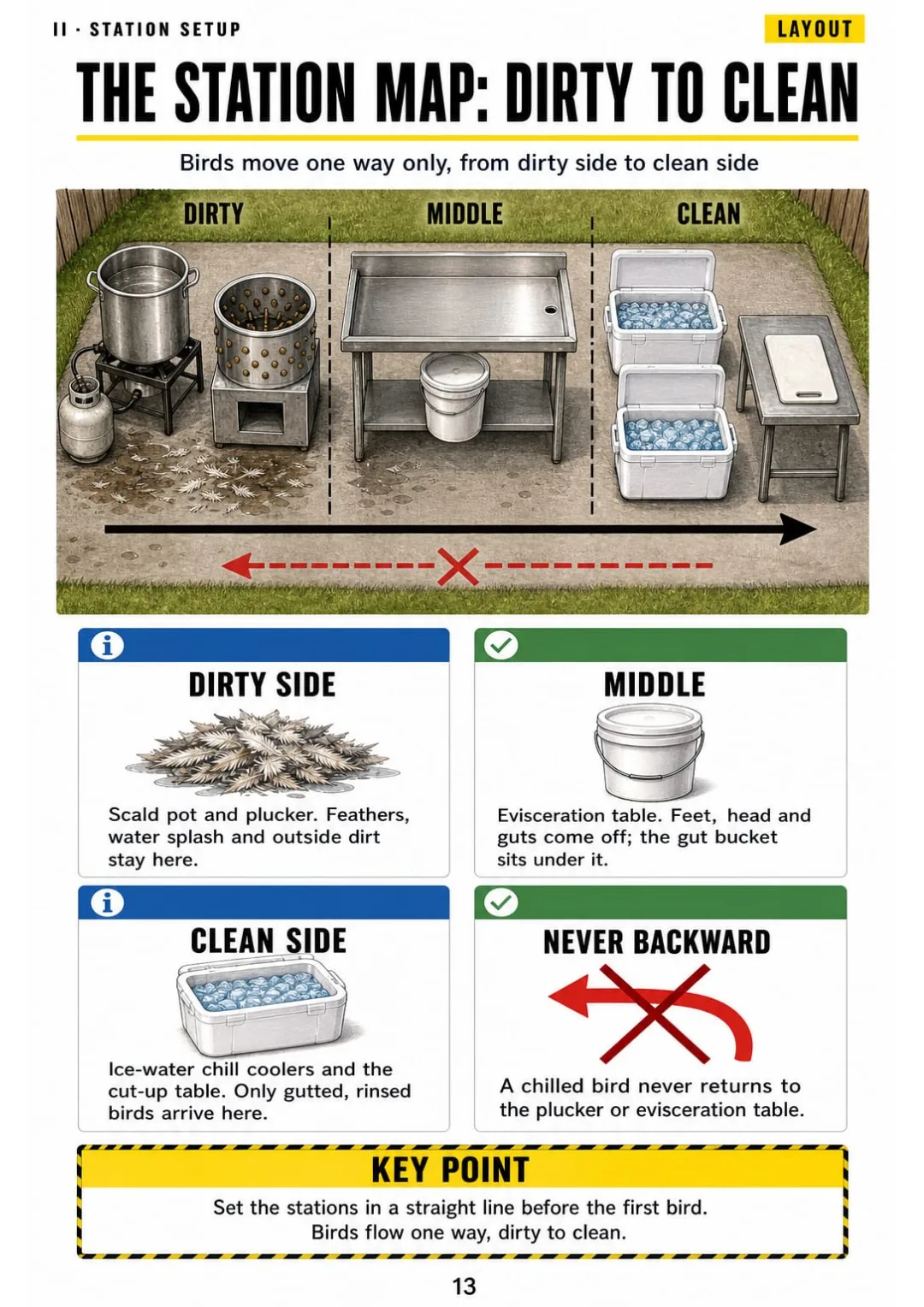
Scald and pluck on the dirty side, chill and cut on the clean side: one way only.
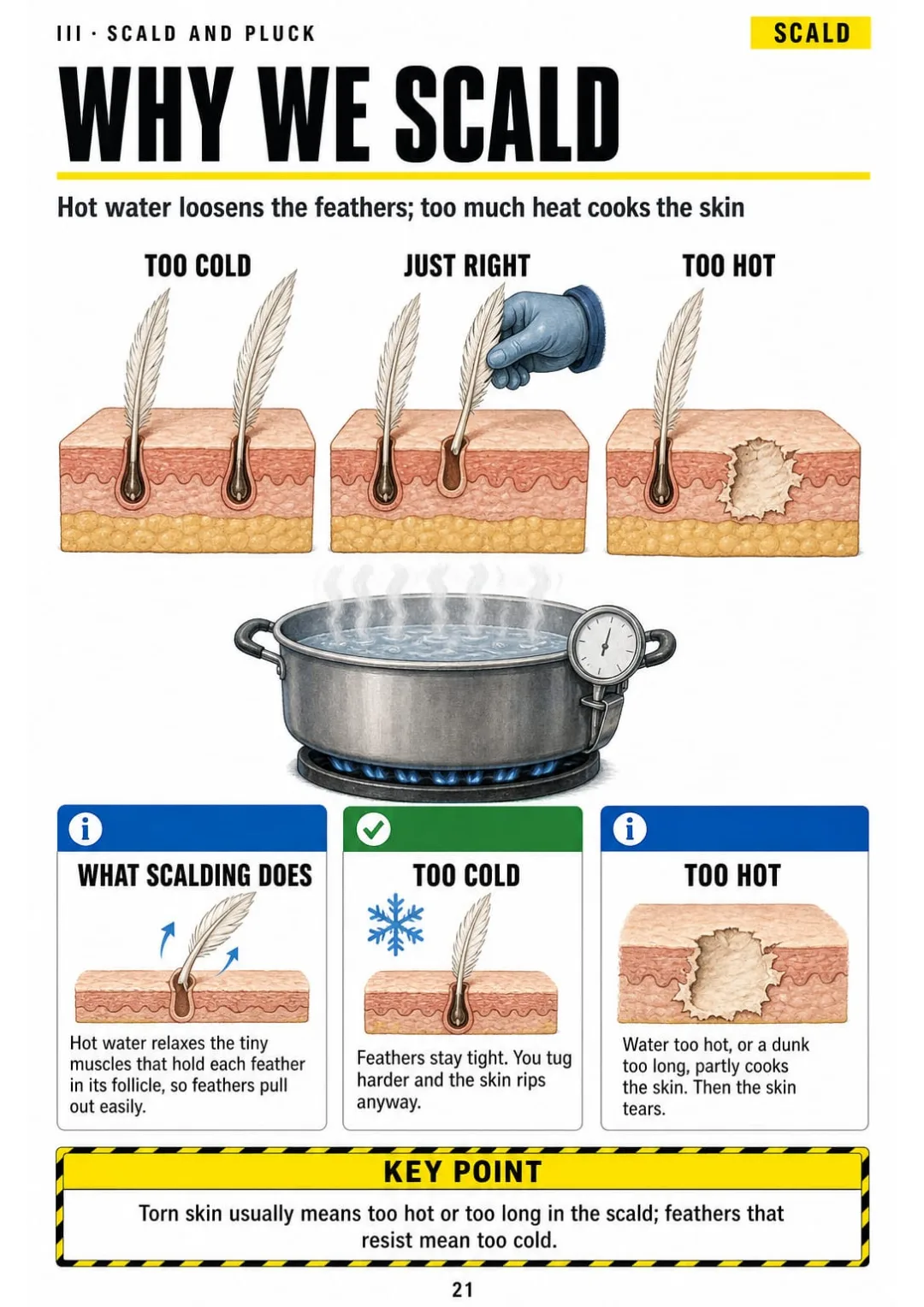
Water too hot partially cooks the skin, so it tears during plucking.
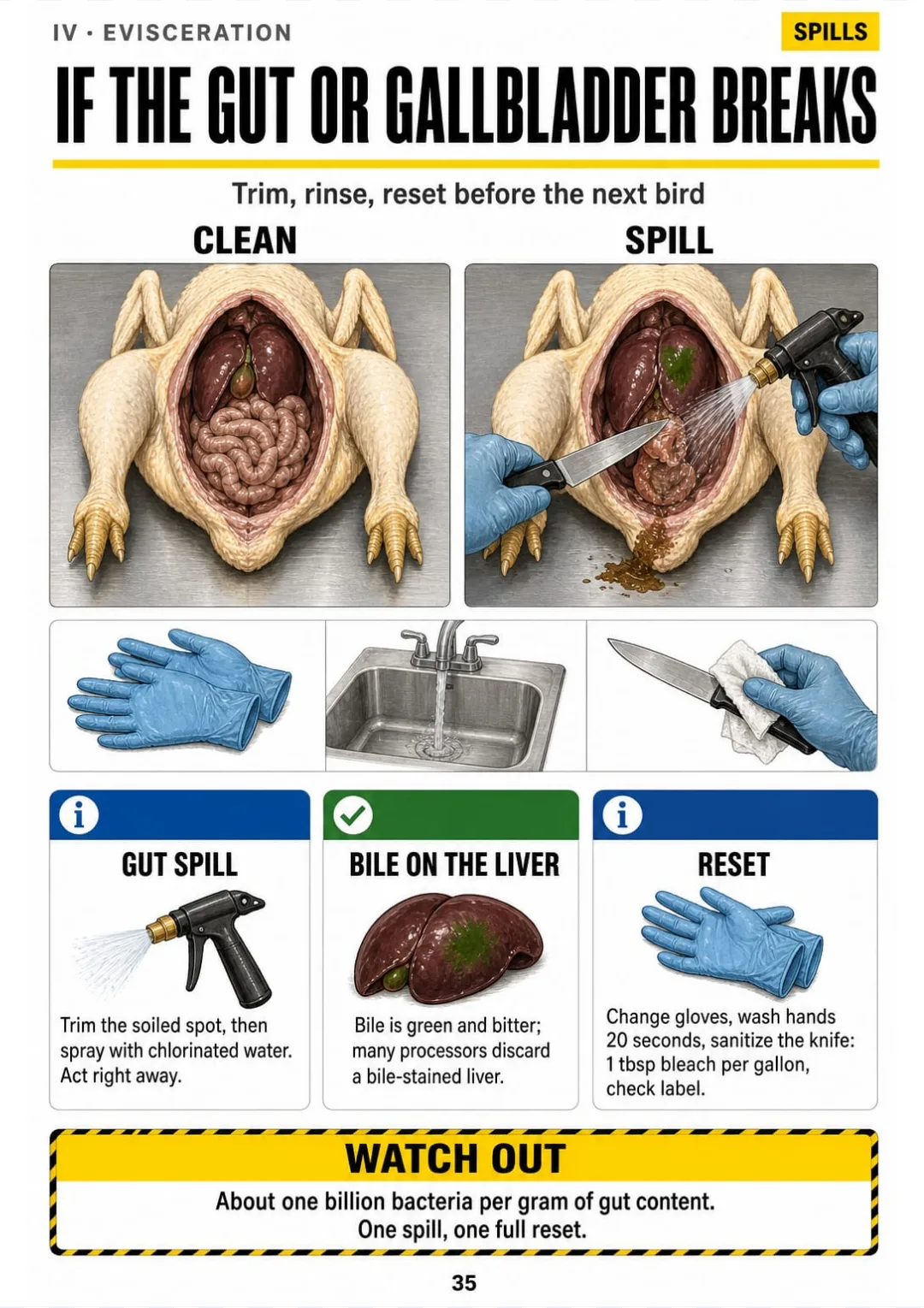
Gut or bile spill: trim, chlorinated rinse, new gloves, clean knife
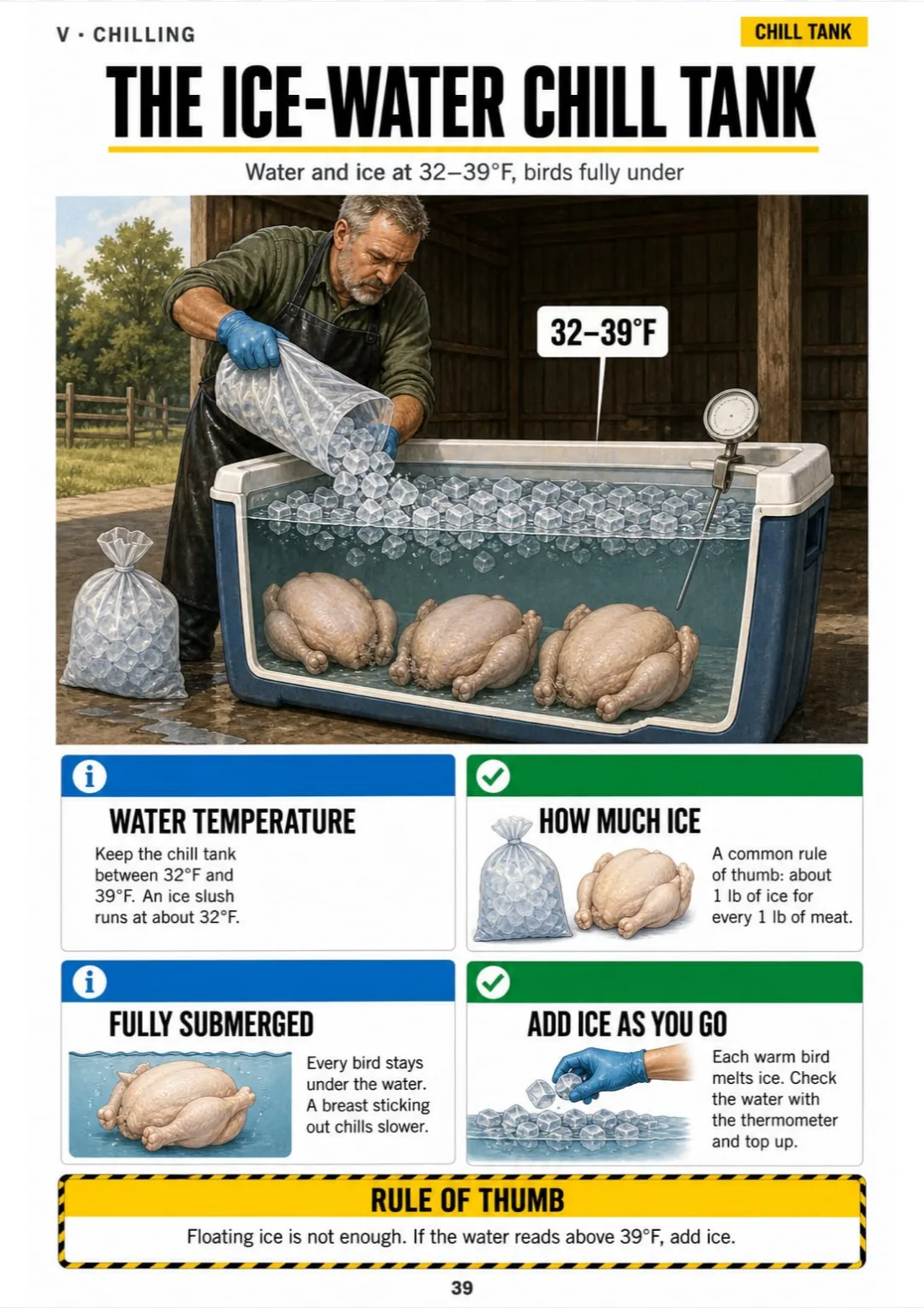
Chill tank: 32–39°F water, about 1 lb of ice per lb of meat.
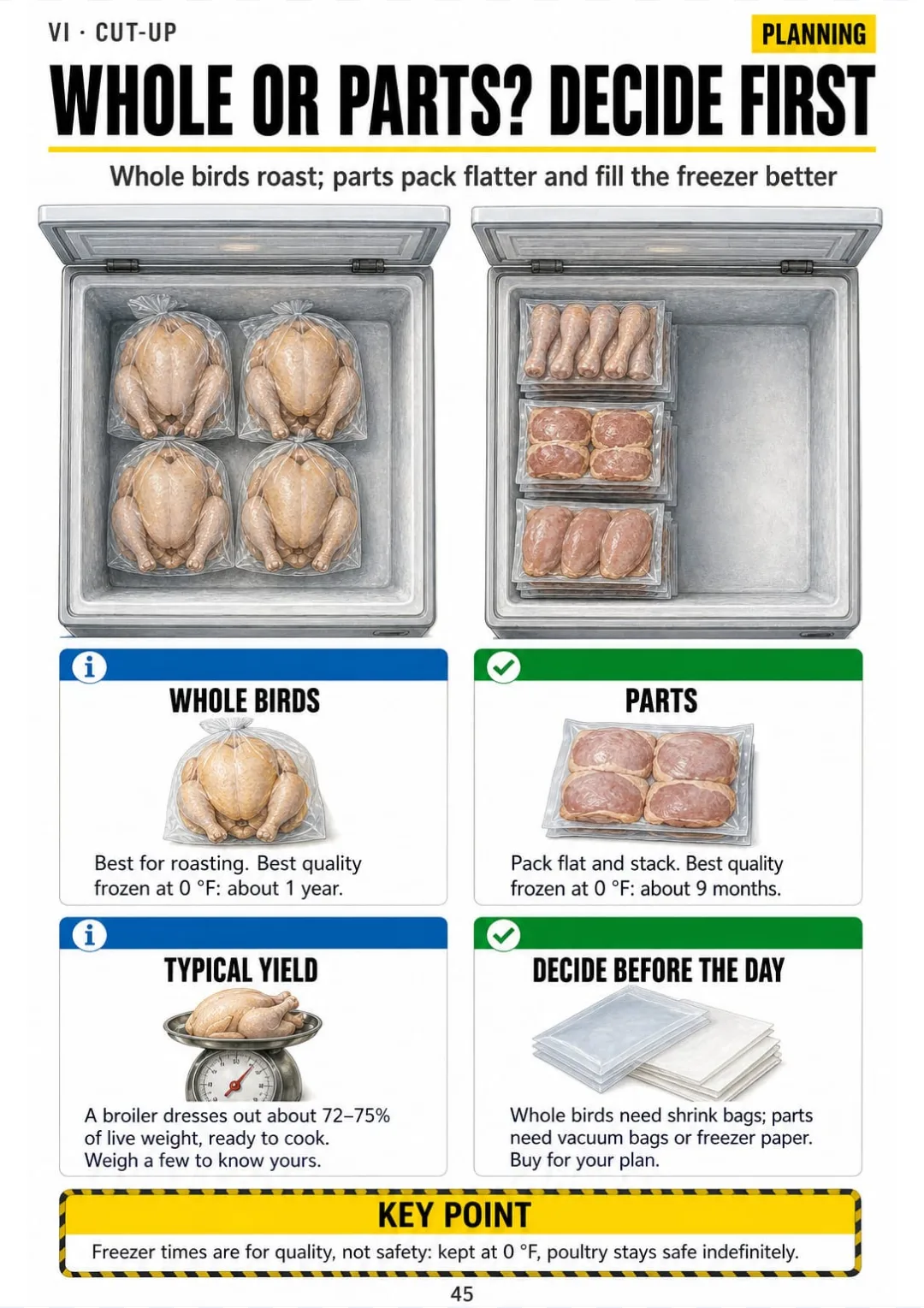
Whole birds: best quality about 1 year at 0 °F. Parts: about 9 months, and they pack flat.
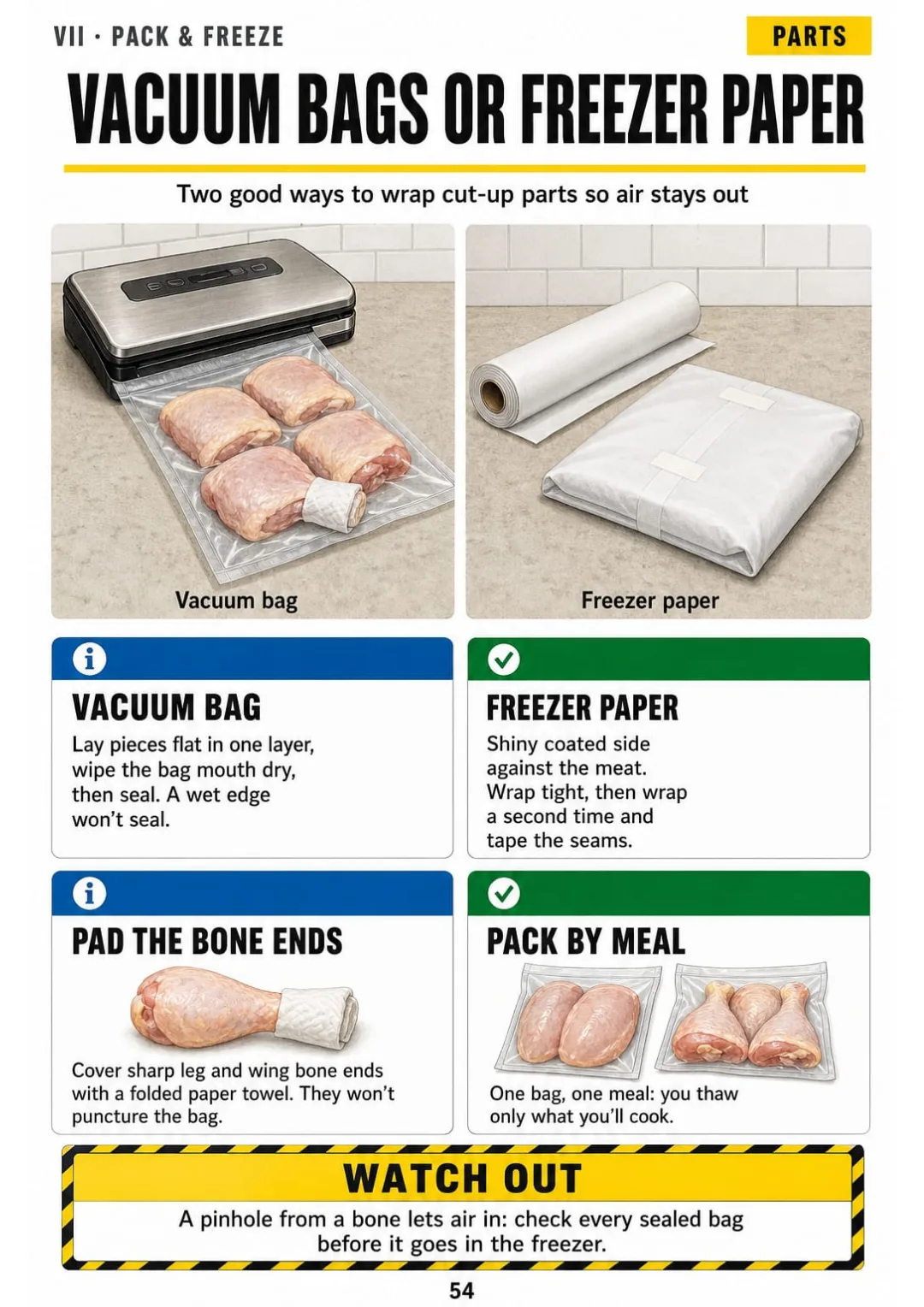
Parts: vacuum bag in one flat layer or double freezer-paper wrap, bone ends padded
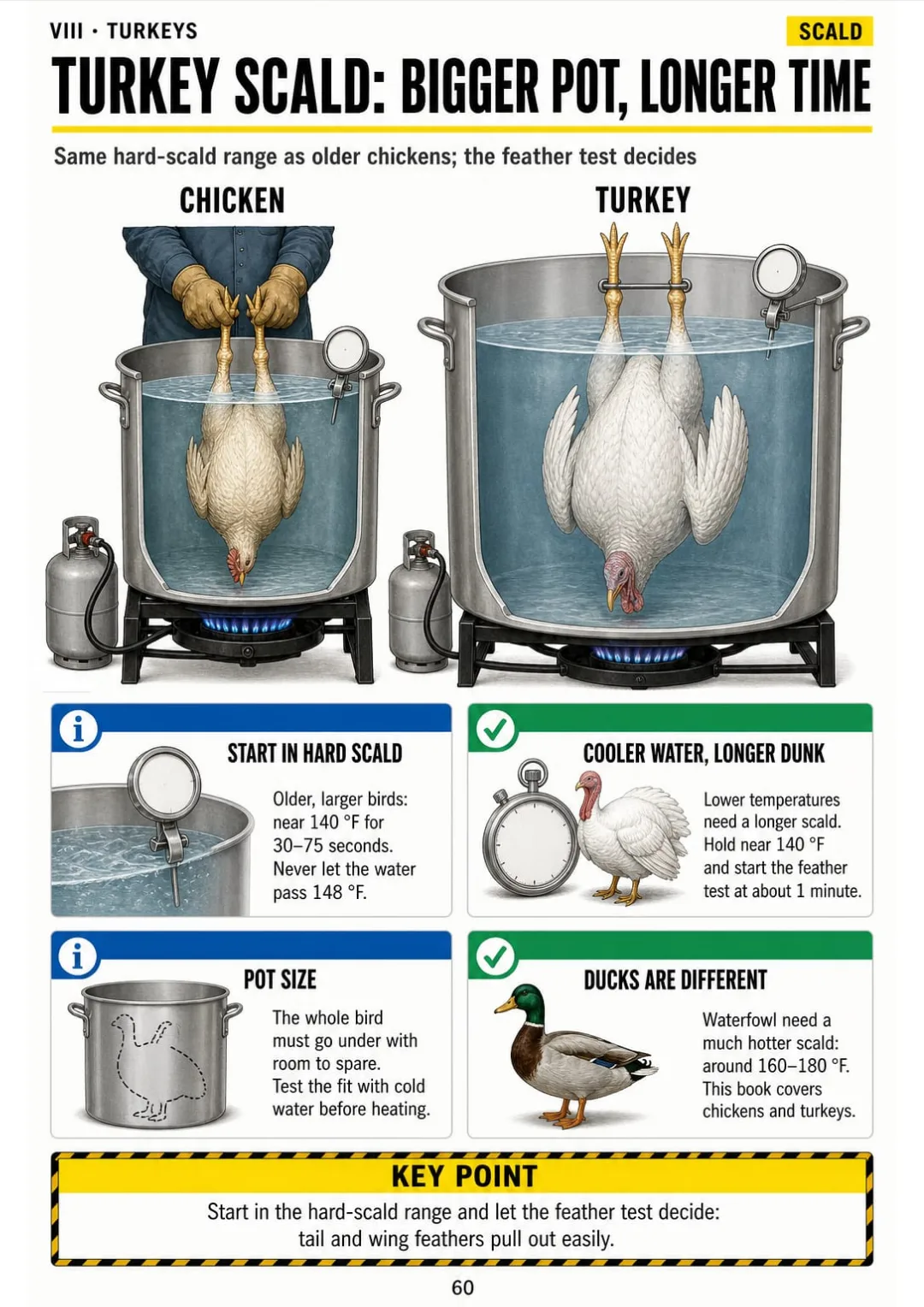
Turkey scald: near 140 °F, never above 147 °F; start the feather test at about 1 minute.

Swipe to see more →

These are real pages from the book. The table of contents is the full one: 9 parts and 66 topics.

The Problem Isn't You. It's How It Was Explained to You.

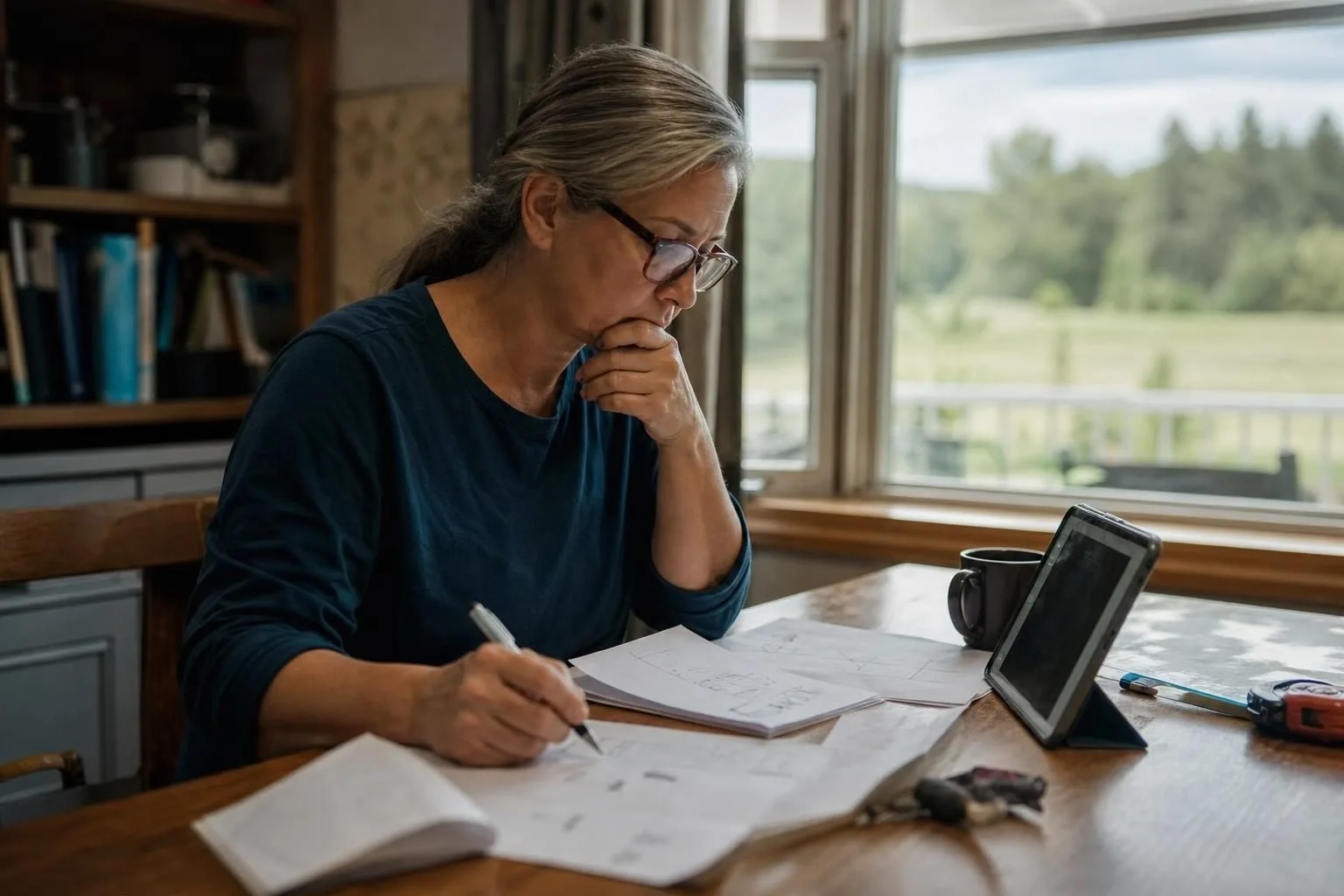
You're standing over the scald pot with the first bird ready. One video said 160 °F, another said 145 °F, and nobody told you what happens if the water runs too hot.

The guide you printed explains it in paragraphs about follicles, skin proteins and heat. You read it, and you still don't know what to watch for in the pot.

Water too hot partially cooks the skin, so it tears during plucking.

Here, why we scald gets its own page. A drawing shows the feather loosening in the skin, and next to it what too-hot water does: the skin partly cooks and tears when you pluck.

The station map, the feather test, the ice-water chill tank, the cut-up joints and the shrink-bag dip work the same way: each one has its own page.

You see why the number matters, set the pot and work through every bird without going back to your phone.

COMPARE FOR YOURSELF

The Same Topic, Two Ways to Learn It

THIS
  • The manual: line after line
  • The station layout explained only in words
  • You go into processing day second-guessing every step
The processing area should be organized so that product moves in a single direction, from operations involving higher levels of contamination toward those requiring greater sanitary control. Scalding and defeathering, which generate feathers, debris and soiled water, constitute the dirty operations and must be physically separated from chilling and portioning. Personnel and equipment should not move from the soiled area to the clean area without washing and sanitizing, and carcasses must never be returned to a previous station once transferred.
FOR THIS
  • The station drawn as a floor plan
  • The flow and the rules in one box
  • You see it and you get it
Scald and pluck on the dirty side, chill and cut on the clean side: one way only.
CONTENTS

Take a Look at the 9 Parts and 66 Topics

Before processing day, setting up the station, scald and pluck, evisceration, chilling, cut-up, pack, freeze and thaw, turkeys, and the review checklists: 70 pages, all illustrated.

IBefore Processing Day · pp. 5-12
  1. The Seven-Step Route: Scald, Pluck, Eviscerate, Chill, Cut, Pack, Freeze
  2. What This Book Covers (and What It Doesn't Show)
  3. Processing Your Own Birds: What to Check in Your State
  4. When Is a Bird Ready? Age and Weight Targets
  5. Pulling Feed 8-12 Hours Before
  6. How Many Birds in One Day? Planning by Hours and Hands
  7. Weather, Shade and Flies
  8. Ice Math: How Many Pounds Will You Need?
IISetting Up the Station · pp. 13-20
  1. The Station Map: Dirty Zone and Clean Zone
  2. The Equipment List, Station by Station
  3. Water Supply: Gallons per Station
  4. Knives: Which Blade for Which Job
  5. Cleaning vs. Sanitizing Your Surfaces
  6. Hand Washing and Gloves at the Table
  7. Thermometers: Checking Yours Before the Day
  8. Waste: Feathers, Offal and Rinse Water
IIIScald and Pluck · pp. 21-27
  1. Why We Scald: Loosening the Feather Grip
  2. Scald Temperatures and Times for Chickens
  3. The Feather Test: How to Know It's Done
  4. Dunking Technique: Up, Down and Swish
  5. Keeping the Water at Temperature Between Birds
  6. Plucking by Hand vs. Drum Plucker
  7. Pinfeathers, Hair and the Final Check
IVEvisceration · pp. 28-37
  1. The Map of the Inside: What You'll Find and in What Order
  2. Removing the Feet at the Hock Joint
  3. Removing the Head and Preparing the Neck
  4. Crop, Windpipe and Esophagus from the Neck End
  5. Opening the Vent Without Cutting the Intestine
  6. Pulling the Viscera in One Piece
  7. Lungs and Kidneys: The Parts Everyone Misses
  8. If the Gut or Gallbladder Breaks
  9. Saving the Giblets: Heart, Liver, Gizzard
  10. Signs a Bird Should Not Be Eaten
VChilling · pp. 38-44
  1. Why Chilling Fast Matters: The Danger Zone
  2. The Ice-Water Chill Tank
  3. How Long to Chill: Time by Bird Size
  4. Checking the Core Temperature
  5. Two-Tank System: Pre-Chill and Final Chill
  6. Resting in the Fridge: Letting Rigor Pass
  7. Draining Before Packing
VICut-Up · pp. 45-52
  1. Whole or Parts? Deciding Before You Start
  2. Removing the Legs: Find the Joint, Not the Bone
  3. Separating Drumstick and Thigh
  4. Removing the Wings and Splitting Them
  5. Breast Off the Bone or On the Bone
  6. Spatchcock: The Flat Whole Bird
  7. The Back, Neck and Frames: Your Stock Bag
  8. The 8-Piece and 10-Piece Cut at a Glance
VIIPack, Freeze and Thaw · pp. 53-59
  1. Shrink Bags: The Dip and Seal
  2. Vacuum Sealing and Freezer Paper for Parts
  3. Labels: What Every Bag Needs
  4. Freezing at 0°F: Space and Air Flow
  5. How Long It Keeps in the Freezer
  6. Thawing Safely: Fridge and Cold Water
  7. Cooking to 165°F
VIIITurkeys: What Changes · pp. 60-64
  1. Turkey Scald: Bigger Pot, Longer Time
  2. Handling a 20-Pound Bird Alone
  3. Turkey Evisceration: Same Order, More Room
  4. Chilling a Big Turkey for Thanksgiving
  5. Working Back from Thanksgiving: The Turkey Calendar
IXReview: Checklists and Frequent Mistakes · pp. 65-70
  1. The Night-Before Checklist
  2. The Processing Day Checklist, Step by Step
  3. Frequent Scald and Pluck Mistakes
  4. Frequent Evisceration Mistakes
  5. Frequent Chilling and Packing Mistakes
  6. All the Numbers on One Page

One Page, One Topic, All Clear

Think of it this way:

It's week eight, the Cornish Cross are at weight and Saturday is processing day. You need the station set up before the first bird goes in the pot.

You open the book to the station map and see it drawn as a floor plan: scald and pluck on the dirty side, chill and cut on the clean side, one way only.

Chill tank: 32–39°F water, about 1 lb of ice per lb of meat.

The same goes for the scald temperatures, the map of the inside, the ice-water chill tank, the 8-piece cut and the shrink-bag dip: each one on its own page.

Home Poultry Processing Illustrated is 9 parts and 66 topics, all drawn, and at the end you get the checklists, the frequent mistakes and all the numbers on one page.

What you see drawn, you don't have to memorize.

What's Inside Home Poultry Processing Illustrated:

Ipp. 5-12

Before Processing Day

The seven-step route, what the book shows and what it doesn't, what to check in your state, age and weight targets, pulling feed, planning the day, weather and flies, and ice math.

IIpp. 13-20

Setting Up the Station

The station map from dirty to clean, equipment station by station, water in gallons, knives, cleaning vs. sanitizing, hands and gloves, thermometer checks and waste.

IIIpp. 21-27

Scald and Pluck

Why we scald, chicken scald temperatures and times, the feather test, dunking technique, holding the water temperature, hand vs. drum plucker, and pinfeathers.

IVpp. 28-37

Evisceration

The map of the inside, feet and head, crop and windpipe, opening the vent cleanly, pulling the viscera in one piece, lungs and kidneys, a broken gut or gallbladder, giblets, and signs a bird shouldn't be eaten.

Vpp. 38-44

Chilling

The danger zone, the ice-water chill tank, chill time by bird size, core temperature, the two-tank system, resting through rigor, and draining before packing.

VIpp. 45-52

Cut-Up

Whole or parts, legs at the joint, drumstick and thigh, wings, breast on or off the bone, spatchcock, the stock bag, and the 8- and 10-piece cut.

VIIpp. 53-59

Pack, Freeze and Thaw

Shrink bags, vacuum sealing and freezer paper, labels, freezing at 0 °F, how long it keeps, safe thawing, and cooking to 165 °F.

VIIIpp. 60-64

Turkeys: What Changes

The turkey scald, handling a 20-pound bird alone, turkey evisceration, chilling a big bird, and the calendar back from Thanksgiving.

IXpp. 65-70

Review: Checklists and Frequent Mistakes

The night-before and processing-day checklists, frequent mistakes at each stage, and all the numbers on one page.

At the end of the book: Night-before and processing-day checklists, frequent mistakes by stage and all the numbers on one page.
Plus: 2 Free Books

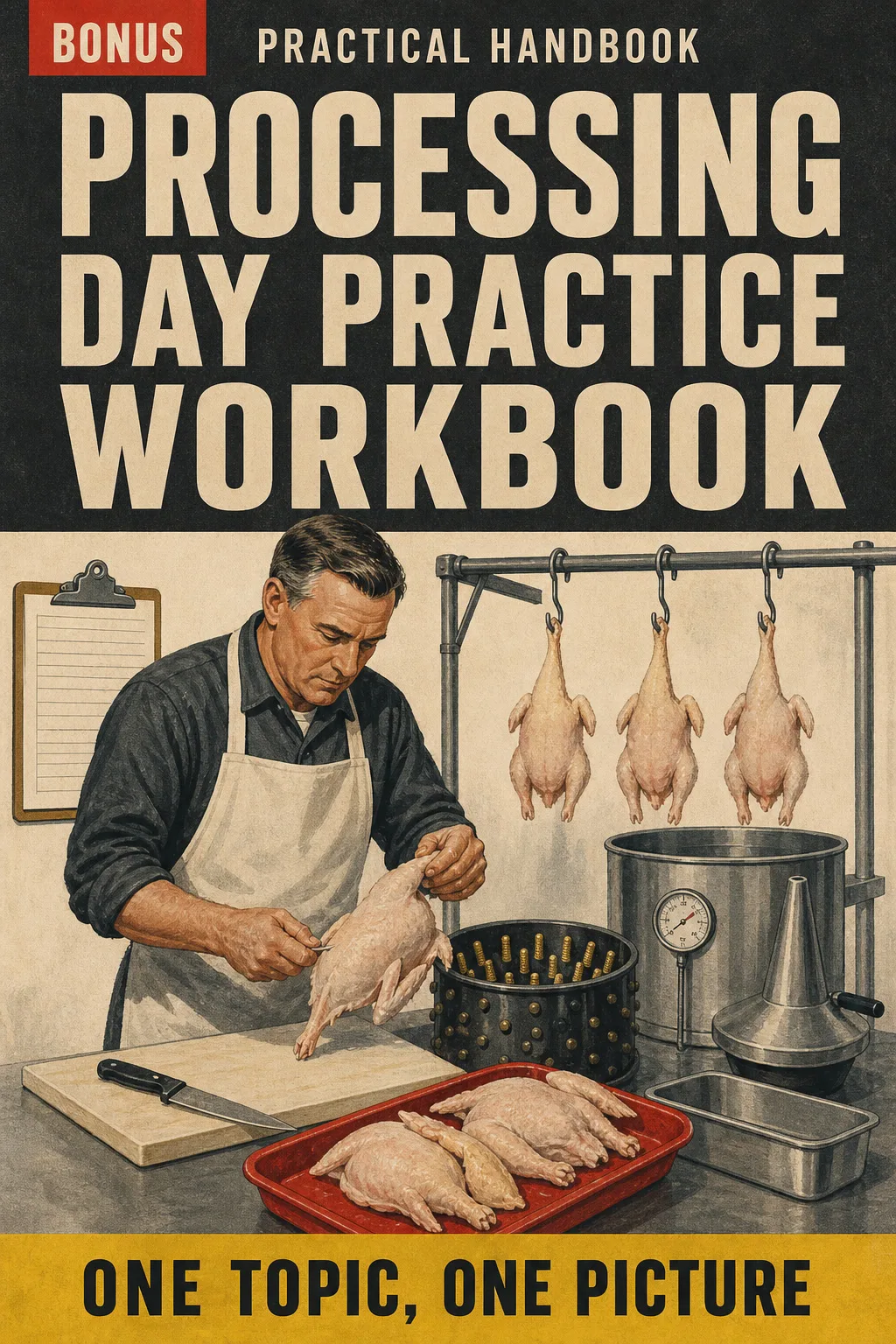
Processing Day Practice Workbook

BONUS 1: «Processing Day Practice Workbook»

Value on its own: US$ 17.90

Walk through scald, chill and cut-up with worked examples and check-yourself questions, so the numbers and the order are clear before the first bird goes in the pot.

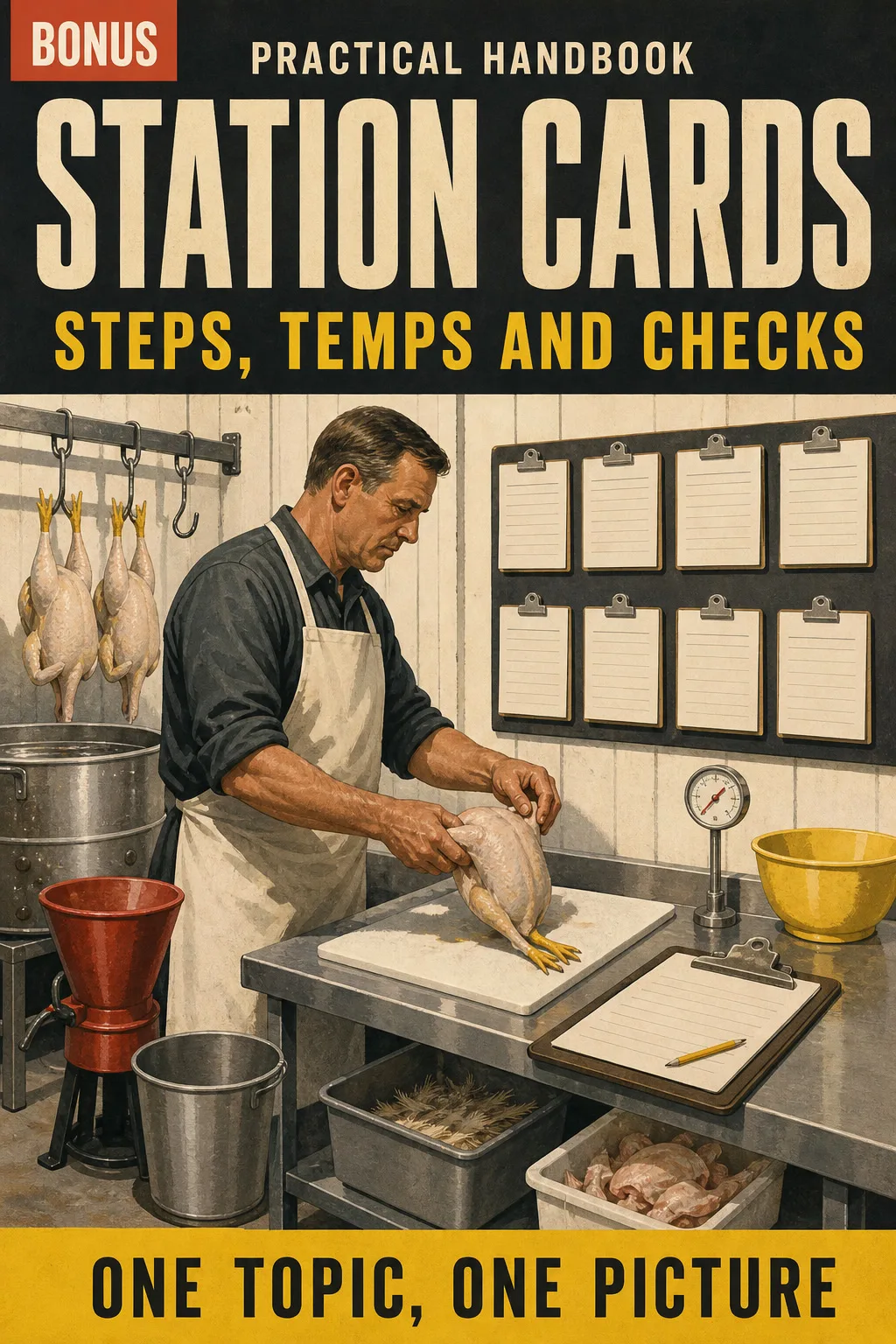
Station Cards: Steps, Temps and Checks

BONUS 2: «Station Cards: Steps, Temps and Checks»

Value on its own: US$ 14.90

One printable card per station with the steps in order and the numbers to watch, to tape up at each table and see at a glance with wet hands.

Home Poultry Processing Illustrated with 2 Free Books

  • Home Poultry Processing Illustrated: 70 illustrated pagesUS$ 63
  • BONUS 1: Processing Day Practice WorkbookUS$ 17.90
  • BONUS 2: Station Cards: Steps, Temps and ChecksUS$ 14.90
  • High-resolution PDF to printIncluded
Total value US$ 95.80
YOUR PRICE:
US$ 27
You save US$ 68.80
YES, I WANT HOME POULTRY PROCESSING ILLUSTRATED FOR US$ 27

📄 This is a digital PDF book sent to your email: nothing is printed or shipped.

Secure purchaseEncrypted payment30-day guarantee

PDF by email: We email you Home Poultry Processing Illustrated as a PDF, together with the two free books. It's a single payment: no installments, no extra charges.

Who This Book Is For

Your First Batch Is Growing

Your First Batch Is Growing

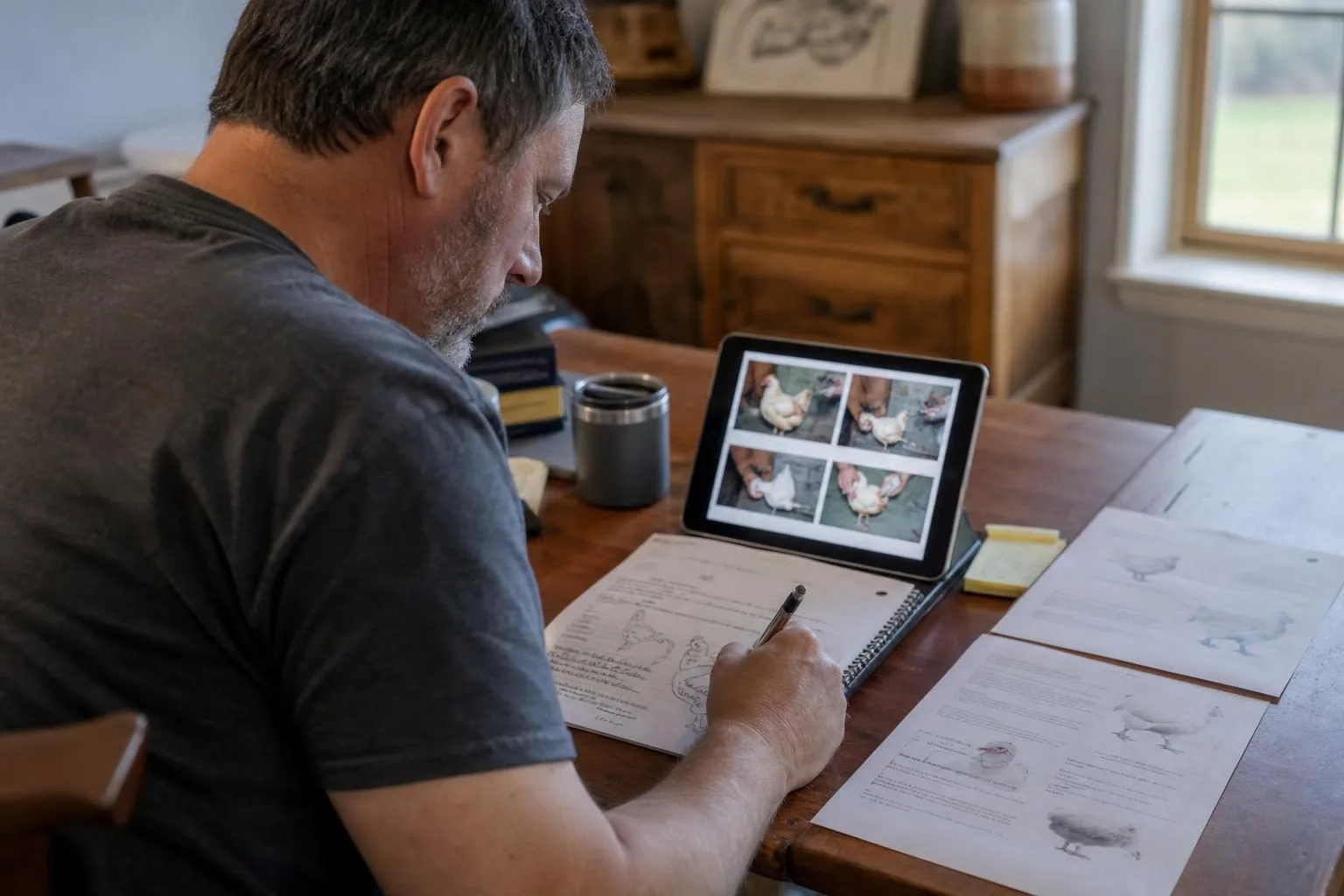
You learn the seven steps and lay out the station on paper before the birds reach weight, with the ice and water math already done.

Processing Day Is This Weekend

Processing Day Is This Weekend

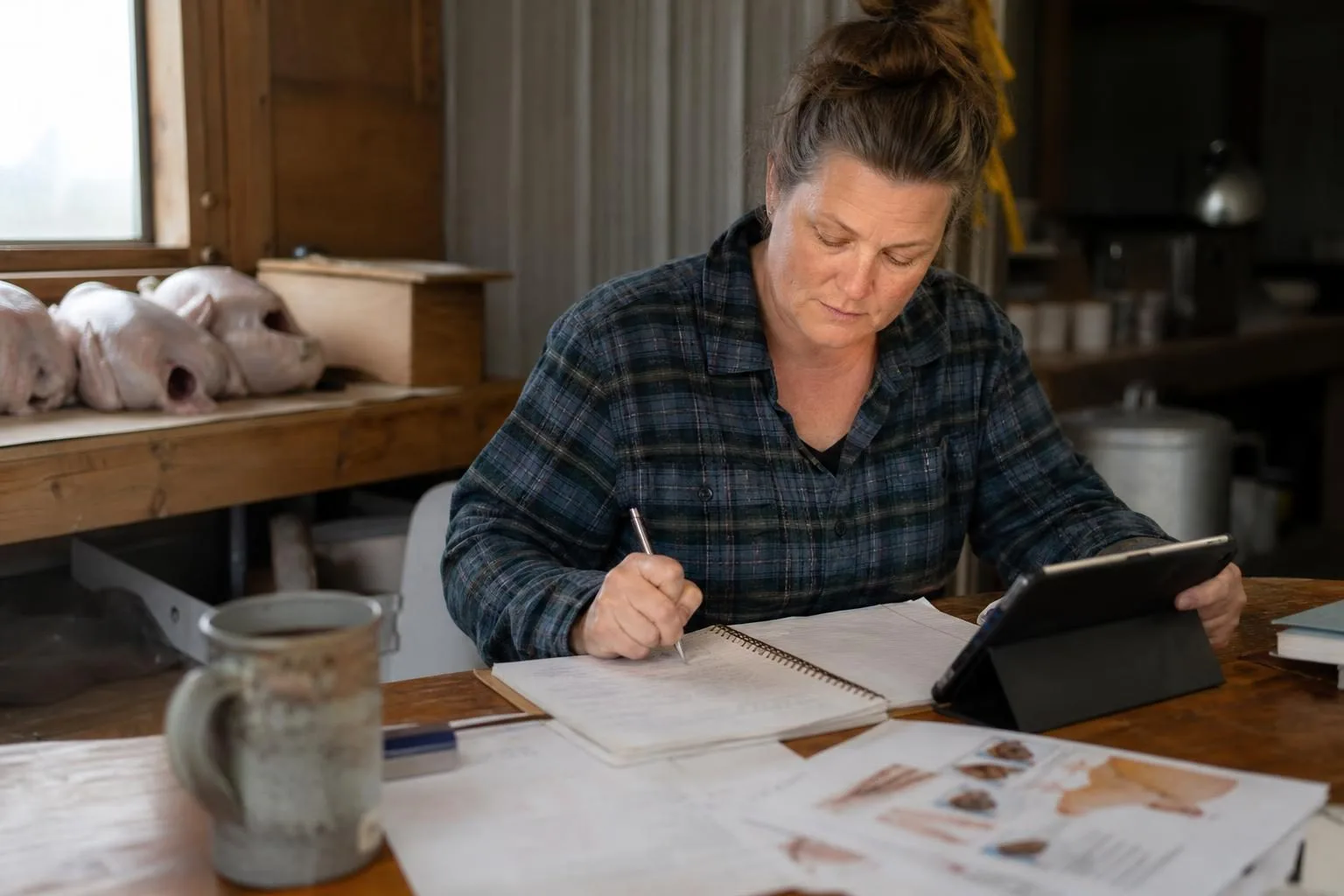
Print the pages, tape a station card at each table and work through every bird in the same order.

You've Processed Birds Before

You've Processed Birds Before

You fix what went wrong last time, like torn skin, slow chilling or tough meat, and add turkeys with their own scald and chill pages.

Everything You Get Today

US$ 95.80US$ 27
YES, I WANT HOME POULTRY PROCESSING ILLUSTRATED FOR US$ 27

📄 This is a digital PDF book sent to your email: nothing is printed or shipped.

30DAYS
GUARANTEE

30-Day Guarantee

Try Home Poultry Processing Illustrated for 30 days, bonus books included.

We refund everything if the file won't open, if the book isn't what you see here, if you were charged twice or if the email doesn't arrive. Just email us.

You pay once. No subscriptions.

Frequently Asked Questions

Is it for me if I've never processed a bird myself?

Yes. It starts with the station and the order of the seven steps, and every step is a clean line drawing. It doesn't show slaughter or blood: the book starts with the bird ready to work on.

Where does the content come from?

Temperatures, times and storage guidance are checked against current USDA FSIS food safety guidance and cross-checked with Cooperative Extension guides on small-scale poultry processing.

Is this official material?

No. It's an independent illustrated guide. USDA guidance is named only to say what the numbers were checked against. No agency published or endorsed it.

Does it work for my state?

Yes, for birds you raise for your own table. The steps and temperatures are the same in every state, and one page tells you what to check with your state's agriculture department before processing day. It doesn't cover selling birds, and it doesn't replace hands-on learning or Extension workshops.

Are the measurements in US units?

Yes. Temperatures are in °F, ice is in pounds and water is in gallons, so you can set the pot and plan the ice without converting anything.

When and how do I get it?

As a PDF by email, sent to the address you enter at checkout. The two bonus books come in the same email.

Do I have to pay every month?

No. It's a one-time payment.

Can I have it on paper?

Yes. The PDF is made to print: print the pages you need and keep them next to the table.

How does the refund work?

You have 30 days. We refund everything if the file won't open, if the book isn't what you see on this page, if you were charged twice or if the email doesn't arrive: just email us.

Before You Close This Page

No more ten videos with ten different numbers.

The scald temperature is drawn on the page, ready to use.

You start processing day knowing where every step goes.

Drawings make studying faster.

The book is right below.

One-time payment: US$ 27 · Guarantee: 30 days · PDF by email

YES, I WANT HOME POULTRY PROCESSING ILLUSTRATED FOR US$ 27

📄 This is a digital PDF book sent to your email: nothing is printed or shipped.